Showing posts with label Favorites. Show all posts

18 March 2013

Busted Up


United States – 1986
Director – Conrad E. Palmisano
MCA Home Video, 1987, VHS
Run Time – 1 hour, 33 minutes

If you’ve ever wondered why the hero so often makes a boneheaded deal with the villain, one that contradicts what we’ve been let to expect by the last hour of the movie, then film theorists have an answer for you. Movies are like dreams they say, offering us a vision of the impossible or improbable fantasy. Continuing in this vein, later critics rely on the Freudian psychoanalytical assertion that dreams are a manifestation of subconscious desire.

I suppose that this makes sense considering that the hero’s bargain flies in the face of logic and lived experience (both his and the audiences) which tells us that “might makes right”, that he is good because he wins. Instead, these movies proffer a reflection of that in the claim that right makes might, that the good guy wins because he is good. (Or at least normatively. He should have even if he doesn’t, therein lies “tragedy”, that generic leakage of reality into fantasy that seems intent on capturing our trust.) It’s a rather large leap to expect that devious characters we’ve just been led for the last hour and a half-plus into despising will suddenly be humbled into keeping up their side of the bargain. A roller coaster ride of emotions going from hate to trust in less time than it takes to digest your corn-nuts, but that’s the point. Not only does it make for some compelling tension and storytelling but it also feeds our more modern, more secular (Democratic) desire to believe that for the little guys (us!) whose reality is far too often dictated by the whims of Capitalist might) there really is an inviolable and objective moral justice out there, somewhere.

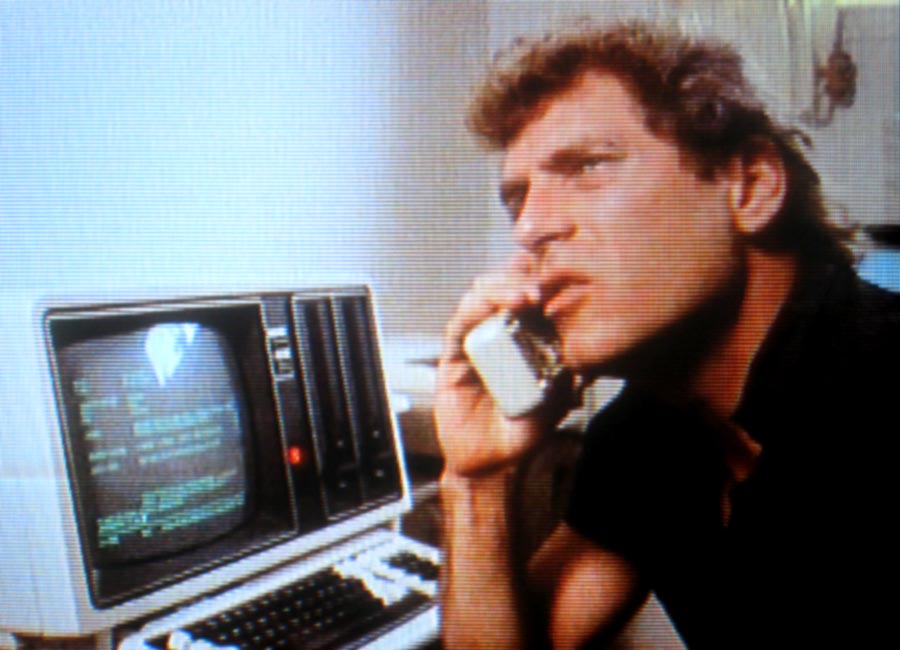
Such is the fantasy of Earl Bird, an ex-con, single father, amateur boxer who wants to believe, has to believe that adherence to a simple moral code will bring him absolution. Boxing has always been a sport imbued with blue collar mythos, and indeed, for Bird, boxing is just a fucking job, but this particular job just happens to be the foundation of an old neighborhood. When the gym he co-owns with his partner/trainer Angie (Stan Shaw) is threatened with a hostile buyout, Bird agrees to wager the fate of the entire neighborhood on a single fight. Presciently named “The Foundation,” the gym serves as a literal community center for a parade of old-timers and troubled kids, and as a metaphorical anchor in a neighborhood suffering economic decline. And, in case the drama wasn’t tangible enough, in steps Bird’s “ex-old-lady” Simone (Irene Cara,) a failed pop singer doing a low rent Irene Cara act in a strip club and now demanding Bird’s retirement and the foundation of a cozy family life.


And oh what a feeling it is now that the fate of an entire demographic hinges on a single boxing match. The battle between Bird and Tenera (who, thorough unexplained flashbacks we are led to understand killed Bird’s pal in prison) although mined for second act tension and inspiring montages, is only a distraction. The real conflict is between flannel and denim community struggling for survival and (white)wine-swilling, classical music-listening capitalism intent on gentrification and “progress.” Couching this class war in the very contemporary economic depredation of the Reagan dynasty, firmly places it in the fantasy world where issues of great moral import can be decisively resolved through acts of personal heroics. Busted Up’s simpler more subtle narrative calls to mind the extreme jingoism of another 80’s "boxing" movie, 1989’s Robot Jox (Stuart Gordon) in which the Soviet Union and the USA not-so-symbolically pummel each other into spare giant-robot-parts. Humbled by Achilles’ victory and moral constitution Alexader is “saved,” and the Cold War is resolved with a friendly man-hug. If in the course of dissecting the socio-cultural symbolism of a low budget movie, I am ever again accused of reading too much into it, of expecting too much from what is claimed to be “just a movie,” I shall say; “No, this movie is expecting too much of me.”


In 1986 things turned out well for Bird’s demographic, but by the end of the decade writer/producer Damian Lee had apparently lost hope. 1989’s Boxcar Blues (aka Thunderground) found Bird (played again by Coufos) fallen on Hard Times, utterly destitute and riding the rails in the deep south, boxing for booze money. Busted Up could probably be dismissed and forgotten as a cheap, three-sequels too late Rocky knock-off with an unnecessarily jazzy score, or a less priaprismic pre-make of Bloodsport minus the screaming. Despite its grandiose trappings, Busted Up is not a grand-scheme type of movie. There is no glory, no celebrity for Busted Up’s humble, blue-collar protagonist Earl Bird, but for all its humility, the implications are nonetheless universal.


Boxcar Blues
United States - 1989
Director - David Mitchell
VCII Home Entertainment, 1991, VHS
Run Time - 1 hour, 36 minutes  

16 January 2013

The Car


United States - 1977
Director - Elliot Silverstein
Anchor Bay Entertainment, 1999, VHS
Run Time - 1 hour, 36 minutes

Nobody I know seems to love this movie as much as I do. Nobody I know (except one person) seems to have seen it. Granted it is kindof a lower quality spin on Speilberg's '71 film Duel, but the underlying crisis has a different dimension. If that made for TV film was a semi-clever riff on the changing dimensions of masculinity in the wake of the 60's, The Car was a more conservative, blunt instrument. Both protagonists are menaced by mysteriously evil vehicles, but their circumstances are different.

In Duel, protagonist David Mann is a modern man, (that is, technically, post-traditional/post 50's) an urban electronics salesman whose 'new' masculinity is challenged by leaving his comfort zone for the rural, physical and isolated setting into which he travels. His is a crisis of the terms of masculinity, terms that changed in the 60's thanks to a number of factors.

Sheriff Parent (Brolin) on the other hand is in his element in The Car's rural Utah town. His position confers upon him the responsibility for safety, order and law, but the Car undermines his ability to provide any of these. Parent's faltering masculinity is a crisis of authority. What with his inability to relate/communicate with women (girlfriend and daughters) the death of his elder mentors and his own repeated declarations that he just doesn't know what to do all suggest his impotence. Not sexual impotence, but a lack of physical potency, but the ability to enact or effect his will on his environment. In a post Nixon/Watergate world, authority (especially institutional) was no longer seen as omnipotent (it was impotent!) Parent's is a crisis of the means of masculinity.

In the first case it is a question of what the definition of a man is and how changing that definition is troublesome or threatening. In the latter case, the traditional definitions remain in place, but the ability of men (a man, Parent) to live up to them is troubled. That the Car seems to come from the city (as suggested by the post-film credits) may be a philosophical reversal of Duel's modern-man-in-danger-scenario, but both films end on a positive note with the destruction of the vehicle and the victory of the man. Despite troubling ripples in the fabric of normalcy, our masculinity, our men, still triumph. Or do they? The last original evil car movie for almost 2 decades, 1990's Wheels of Terror aligned the car with male sexual terrorism.

In any case, in the subsequent decade both films would be overshadowed by a number of evil-machine Stephen King pictures, but the 70's and 80's was a good era for vehicular possession that reflects to some extent the ambivalence about technology that pervaded culture at that time. One possible and partial explanation for the first is above, but in any case, I think it's sad that The Car kinda got buried by the second.

This image I got from TVTropes looks like the cover of a novel.


I do love some Japanese poster design. This one and the one above it come from Movie Poster Shop which has a whole bunch of other posters for The Car.

05 November 2012

Dead Heat


United States - 1988
Director - Mark Goldblatt
New World Video, 1988, VHS
Run Time - 1 hour, 26 minutes

Among the more bizarre buddy cop films, Dead Heat ranks pretty high up there. Although the plot itself, with a mad-scientist transplanting old people-souls into young people bodies, isn't all that exciting, the execution is pretty damned fun. Joe Piscopo and Treat Williams are at their knuckle chewing best as endlessly annoying and whiny buddy cops respectively. Who would have them any other way? Quite possibly one-upping the medical supply warehouse scene from Return of the Living Dead in which the butterflies and split-dogs are zombified, Dead Heat features a similar scene in a Chinese butcher shop
They don't make 'em like this any more.

20 August 2012

Night of the Bloody Apes


Mexico - 1972
Director - Rene Cardona
Something Weird Video, 2002, DVD
Run Time - 1 hour, 24 minutes

Hollywood is so prolific, churning out such a tremendous volume of visual distraction that it’s impossible to keep up. Even less so to follow foreign cinema. Hence it may come as a surprise to many United Statesians to discover that Mexico also has a film industry. Actually they have for quite some time. Many other countries do, but the American Academy only acknowledges one a year and those have been overwhelmingly European. But it’s true, Mexico has a film industry, and like its contemporaries, Mexican cinema has its own genre conventions. They have their classy commercial films and their grimy low budget exploitationers, both of which may or may not make the treacherous journey north. If the metaphor serves for what types of Mexicana are acceptable in Gringolandia then it should come as no surprise that the latter circulates somewhat under the radar. My own introduction to Cine Mexicano was not gentle. I was cast bodily into a grimy pit of vice from the get go, and while my experience remains limited (less and less so), it is forever colored by my first Night of the Bloody Apes.

Coming just under a decade after Blood Feast uncorked the gore-film upon unsuspecting Gringos, Night of the Bloody Apes went further and faster, taking cues from the then current European Mondo fad and mixing it up with a generous dose of nudity and Mexicana. The story concerns the distraught Doctor Krallman (a suitably ‘German’ name*) whose son Julio is dying of Leukemia. In an attempt to save him, the good doctor and his lurching, half-blind henchman replace the son’s heart with that of a gorilla. This gives ample opportunity for the showcase gross-out scene in the film; footage of an actual open heart surgery complete with squirting blood and still beating organ.

But what curative medical procedure ever works in horror? It is around this very failed operation that our film is also given a lease on life. The heart proves “too strong” for poor Julio, unleashing his deep animalistic urges during spells of apparent catatonia. When Julio passes out, the inner ape stirs and smashes his way onto the streets of Mexico City in search of men to kill and women whose clothes are easily torn off.


In a pursuit one would be hard-pressed to call ‘hot’, follows police Lt. Martinez. Still, his enthusiasm lies predominantly in chasing something that is; Lucy, a sturdy Luchadora who dresses in a red-devil costume before kicking ass. If it wasn’t for Lucy’s overzealousness in the ring, Lt. Martinez might not have been trying to solve the Ape-man murders at all. During a bout Lucy severely injures her opponent who ends up in the same hospital where Krallman works. A second grisly operation using the heart of Lucy’s comatose opponent coincides neatly with another violent-disrobing right across the street from Krallman’s home/basement-laboratory and the jig is up for his erstwhile eugenics project.


While its debt to H.G. Lewis et al. is evident, Cardona is also in some ways the Mexican version of Italy’s Mario Bava. After working on his father’s films (they co-wrote this one) Rene Cardona Jr. went on to direct his own low (and not so low) budget horror films, some of which, Beaks and Tintorera, we’ve covered here at LVA. I hate to make apple/orange comparisons that rob films of their individuality. If doing so will make the Cardona legacy and Mexican Cinema tangible and hopefully more accessible however, then the overgeneralization is worth it. Night of the Bloody Apes is among my favorite monster/splatter films. It is a beautiful example of the ‘serious’ exploitation filmmaking that is all but impossible in our current age of post-Scream meta-irony. Loaded with budgetary shibboleths and logic loopholes, it plows earnestly ahead with little more than coincidental interest in "art."


 This sleeve comes courtesy of Itsonlyamovie.co.uk

This one from Lars Jacobsson

A poster from Radio Magma

*Mexican movies of this and earlier eras (see LVA's coverage of the Aztec Mummy) loved to give the bad-guys European names. This was part of a larger project to establish a distinctly Mexican national identity as separate from European or American influence which then, as now, was often considered more ‘pure’ and important because it was whiter. Night of the Bloody Apes (a remake of Cardona’s own 1962 film Doctor of Doom) would seem to suggest that these dangerous foreign influences are just going to fuck Mexico up.

11 June 2012

Wild Gals of the Naked West


United States - 1962
Director - Russ Meyer
RM Film International, VHS
Run Time -1 hour, 5 minutes

Perhaps I should make it perfectly clear and come clean just in case it hasn’t become obvious by now. No matter what I may say elsewhere, the fact is that I'm a heterosexual American male, so I can't help but like westerns. Most of the people that I know who are into horror and science-fiction films aren’t really big on the westerns. I’m not really sure why this is, and the reasons probably vary from person to person, but I’m guessing that it’s primarily due to the costumes. Well my friends, I have some good news to report. That problem has been solved (actually, quite some time ago.) Thanks to the unique and wonderful stylings of dedicated and intrepid writer/director/producer Russ Meyer, costumes are not a problem at all in Wild Gals of the Naked West.

Oh, I’d be lying to you if I said this was some kind of western with aliens or zombies, because it isn’t. It’s still a western, and there are still the usual boots, chaps and neckerchiefs. But you probably won’t even notice them, or at worst, you'll notice but won’t care. That’s because you’ll be taken in by the sheer volume of cutting edge filmmaking techniques displayed by this auteur director. First and foremost is the dramatic set design of Wild Gals. It's a sparse minimalistic look reminiscent of the finest groundbreaking German films of the silent era. I hesitate to say avant-garde (that’s French anyway), but it’s very different and experimental, sort of like meta-set-design if you know what I mean

Second is Wild Gals' pacing, a cacophony of repeated obnoxious Benny-Hillesque audio-blasts synched with a staccato of quick repetitive close-ups. It’s a collage effect very much ahead of its time, in fact it presages the fast-paced, short-attention-span editing style of films popular some 50 years later with today’s youth. It seems very nearly designed to induce a Pavlovian response to images rather than contributing in any way to the narrative. Don’t get me wrong, there is a story to Wild Gals, it just, how shall we say…. doesn't require much of an attention span at all.


Finally, and this is probably the most important innovation in the western genre since John Ford met John Wayne; the lack of costumes altogether. True, as I mentioned above there are still costumes, but here comes the kicker; not on everyone (or every body.) It is precisely the dearth of costumes, or more accurately their sparing use that makes Wild Gals such a watchable western. When half of the cast is barely wearing anything at all, the relative level of attention that the costumes get pretty much averages out if you ask me

All told Wild Gals of the Naked West is a deceptively simple film with an incredibly clever nucleus. Budgetarily it may not be a shining star, but what it does have it isn’t afraid to hang out in the open. Actually its willingness to bare itself in all sorts of ways is what makes this film such a special piece of cinema history. So I guess I'm not sorry that I like westerns. Ever since my first mindboggling exposure to Wild Gals so many years ago, I have held for them a very dear place in my bosoms.

16 April 2012

Nail Gun Massacre


United States – 1985
Director – Bill Leslie and Terry Lofton
Magnum Entertainment, 1987, VHS
Run Time – 1 hour, 30 minutes
I’m still pleasantly surprised by the tenacity of physical media formats. Of course, the physical ownership aspect of consumerism will be hard to kill, but if you asked me a couple of years ago I never would have believed that some crazy ass would still be putting out quality DVD releases of just plain obscure, wonderfully shitty movies like Mardi Gras Massacre. I personally never thought that one would see the light of day again. Apparently there is a large enough community of bad-taste aficionados like myself to make it worth Code Red’s while. I’m not complaining mind you. There is a little bit of selfish desire to be the lone holder of some secret esoteric knowledge, but in the main I would rather people get a chance to see these flicks.

A perfect example is this film, the Texas masterpiece known as Nail Gun Massacre. I first saw this beauty almost 15 years ago on a second generation bootleg tape. It’s a very special thing, among my favorite horror films of all time and I finally, finally picked up the Synapse DVD release of this re-found-classic. Nail Gun Massacre’s detractors may be many, but there’s no accounting for taste. There are a host of no-budget shibboleth’s in this film, all of which I find profoundly endearing. In the tradition of Zombie, I will present a laundry list of reasons that Nail Gun Massacre is a video classic.

What's this getup Doc, ya'll a foreigner?
  • I talk a lot of shit about Canada here on LVA, but in my real life, the one in which I interact with physical objects and three dimensional space, I am actually fine with Canada and biased against Texas. Long story, silly geographic/political reasons. Nevertheless, Texas somehow managed to push out some of the finest low budget video-era exploitation cinema. (I’m adding the label “Texas” right now so you can see what I mean.)

  • Rape revenge films have a long history which doesn’t seem to want to stop. Lucky McKee’s recent film The Woman being a fine example of the perennial appeal of brutalized women and “justified” retaliatory violence. Nail Gun Massacre gets the rape over quickly and without unnecessary graphicness. Then it moves instantly right on to the revenge which, despite the obvious anatomical proportions of the killer in a number of scenes is not the rape victim.

  • See if I use you in one of my movies again!
  • I get the connection between construction workers and sex, so all the killing of framers/carpenters and copulating couples makes sense. Nevertheless, for some unknown reason the killer goes on to murder a number of random women, leaving the question of motive still ambiguous enough for a possible sequel. (Please?)

  • The nail gun makes a wet-fart sound and the actor gives it a little jerk to make it look like its firing.

  • I’m sure we’ve all seen enough action films to be familiar with, and probably tired of the corny one-liner. Still, you haven’t heard them like this; there are so many in Nail Gun Massacre that they’re fucking paragraphs.

  • From a purely base, heterosexist point of view, the irony of anatomy is too good to be true. In the first sex scene the woman has small breasts and the guy groping her has huge meaty ogre-hands, while in a later scene a very well-endowed woman is paired up with a skinny, weasely little freak. I’m sorry, but I just think that’s funny.

  • "The Mekong in '68 man, that was bad, but this..."
  • And finally, the murders themselves are so grisly, so ghastly, so godawfully gory, that even the local doctor (who wears a Canadian Tuxedo the entire film) says “I haven't seen anything this brutal since 'Nam.” And that about sums up Nail Gun Massacre too. It’s kinda like what you’ve seen before only more extreme, more shocking and more exhilarating than any of it. Sure, you might say “bad,” (and apparently someone un-ironically did, director Lofton was compelled to repeatedly defend the film in the DVD special features) but we’ve all known since the 80’s that “bad” is a relative term. Nail Gun Massacre is easily one of the baddest. 
     
Dang, that's bad!
     

14 February 2012

The Killing Fields


United Kingdom - 1984
Director - Roland Joffe
Warner Home Video, 1986, VHS
Run Time - 2 hours, 22 minutes

As a longtime student of the conflicts in Southeast Asia, this is among my favorite films on the subject. Although only peripherally related to Vietnam, it is an integral part in the overall history of the region. Not only is The Killing Fields really well acted, (regardless of anything else he has done or will do I have eminent respect for Sam Waterson because of this movie), but it is acted by an actual survivor of the brutal purges, the Killing Fields of Cambodia; Dr. Haing S. Ngor, one of only two non-actors to win an Oscar. Ngor went on to act in a number of films, usually about Vietnam, only to be murdered on the streets of Los Angeles in 1996.

19 September 2011

Chicago Blues


Chicago Blues
United States - 1972
Director - Harley Cokliss
Rhapsody Films, 1991, VHS
Run Time - 50 minutes

There are a number of interesting things about this brief documentary beginning with the director. Cokliss has continued to work in film and has some noteworthy films to his name, however Chicago Blues is not listed among his credits. Nor is it listed among the credits for cinematographer Tak Fujimoto who has an even more impressive resume. Perhaps they're not proud of this film now that they've gone on to the big time. I can't understand why that would be the case though, Chicago Blues is a great piece of history.

Like many of the blues documentary and performance footage shot at the time it suffers a bit from the amateur anthropologist mentality of its makers. Upon 'discovering' Black culture through music in the 60's, white people seem genuinely surprised and practically impressed that there is a Black culture. In presenting the art, white filmmakers repeatedly decontextualized it, filming performers in artificial folksy or rural settings and surrounding them with curious white onlookers.

Chicago Blues is an exception to this trend namely because it doesn't present its subject matter as an exhibit. Icons Muddy Waters, Junior Wells and Buddy Guy (all of whom recorded together in the early 60's) and lesser known bluesmen like Floyd Jones discuss the experiences that led to the creation of the Chicago Blues sound. In the years during and after World War II, large numbers of Blacks left the south to find work up north. As a hub of national commerce, Chicago proved to be one of the most promising destinations. For people born and raised in the south, and for the music they brought with them, the change proved to be utterly transformative. In fact, it is that experience which the film claims was the context for the creation of the Chicago sound. More than any other blues film or documentary that I've seen, Chicago Blues attempts (and mostly succeeds) in allowing the subjects, from the musicians to the city, to speak for themselves.


25 July 2011

Arena


United States - 1989
Director - Peter Manoogian
RCA/Columbia Pictures Home Video, 1991, VHS
Run Time - 1 hour, 37 minutes

The list of mostly forgettable science-fiction popcorn films produced by Charles Band’s Empire Pictures in the ‘80’s is for the most part an unchallenging intellectual vacuum. In many cases that is what makes them so mindlessly entertaining. With a naïve innocence that can only come from sincerity and a (relatively) low budget, Arena is a shining example. It doesn’t require any mental acrobatics or ask any hard moral questions, but it was a little better made than most of the Empire Pictures catalog. Arena is at some six years distance, clearly riding on the coat-tails of Star Wars. It is not surprising then that in addition to its Empire pedigree, Arena should suffer from many of the same philosophical shortcomings as its source material.

With nowhere else to go after losing his job on a space-station somewhere in the universe, Steve Armstrong (Paul Satterfield) bunks with his former coworker Shorty in the slums. Here he meets a destitute bum, the last human champion of the Arena, an intergalactic boxing competition that has been dominated by aliens for the last five decades. He anoints Steve as the next human champion of the Arena making him quite literally the Great White Hope in space.

The man in the Sloth suit is future director Steve Wang

There are two categories of aliens that populate Arena and highlight Steve’s messianic status. Both are visibly differentiated from the protagonists. The first are helpers, house-aliens who are silly and or dumb but totally harmless. To remove any ambiguity, the second group, Steve’s rivals, are not only visibly different but especially hideous, making them even more clearly unsympathetic and evil, and giving the good aliens excuse to support the collective restoration of a properly ordered hierarchy  without appearing overtly Uncle Tomish. Steve’s final opponent, the present champion Horn is also a cyborg. As such he is not only a direct threat to and reaffirmation of human physical purity, but a confirmation of the physical corruption and immorality of the non-human which has to “cheat” in order to win. And in fact, that’s precisely what Horn’s manager Rogor does when it becomes clear that Steve is going to beat his fighter.

Jade (Sharri Shattuck) a sultry nightclub performer (Shattuck actually performs several of Richard Band's songs) and Rogor’s lapdog is sent to seduce and poison Steve before the championship fight. Yet despite a romp through the futuristic spacy mylar sheets in Jade’s cat-box, her eroticism does not bode well for the normative settled family relationship. Instead, there is Quinn (Claudia Christian,) a reserved, practical woman carrying on her father’s legacy as a boxing manager. It is with her faithful encouragement and training that Steve will restore hetero normative values to the universe. Can there be any doubt that our ubermensch will succeed in setting all of this straight when the distinction between right and wrong is so clear-cut?

The ultimate Buck?
Despite all of this 50’s era conservative paranoia, Arena is still enjoyable for a number of reasons. The practical special effects provided by Screaming Mad George are better done than most of Band’s films. Arena is also distinctly more working-class than its big budget franchise predecessor. Boxing, which is really all the Arena fights are, has always been viewed as a proletarian sport. Related to this is my final assertion that Arena’s settings capture perfectly the appeal of the mundane. From the diner of the opening sequence, to the slums where Steve is verbally identified as the hero (it’s always been visually obvious), to the contest itself where order is restored, Arena is fiction made tangible. Without throwaway details like burned eggs and garbage, it would be just another space movie. Narrative details that speak to perceived experience are what make good fiction. Unfortunately that’s why audiences rarely question such obviously reactionary symbolism when couched in throwaway sci-fi fluff.


This beautiful VHS insert comes from Japanese VHS Hell, go visit 'em!

29 August 2010

The Crawling Eye


A.K.A. The Trollenberg Terror
United Kingdom - 1958
Director - Quentin Lawrence
Starring - Forest Tucker and Janet Munro

I used to hate black and white monster movies but this was one of the first ones I was able to appreciate. Among all the Evil Dead and Re-Animator I was watching back then, the giant tentacled eyeballs of The Crawling Eye struck a chord that has reverberated ever since.


The classic poster image and below, a VHS box with a Munsters tie-in thing going on.


I found these images a long long time ago so I have no idea where I got them. If they are yours let me know and I'll give you credit.